波士顿糖蜜大洪灾:一股糖浆巨浪夺走21条人命的那一天
 Detetive Curioso
·3 分钟阅读·历史·33 次浏览
1919年1月,波士顿一座巨型储罐破裂,870万升糖蜜涌上街头。黏稠的巨浪冲毁房屋,造成21人死亡,也改变了安全法规。
本文尚未翻译。
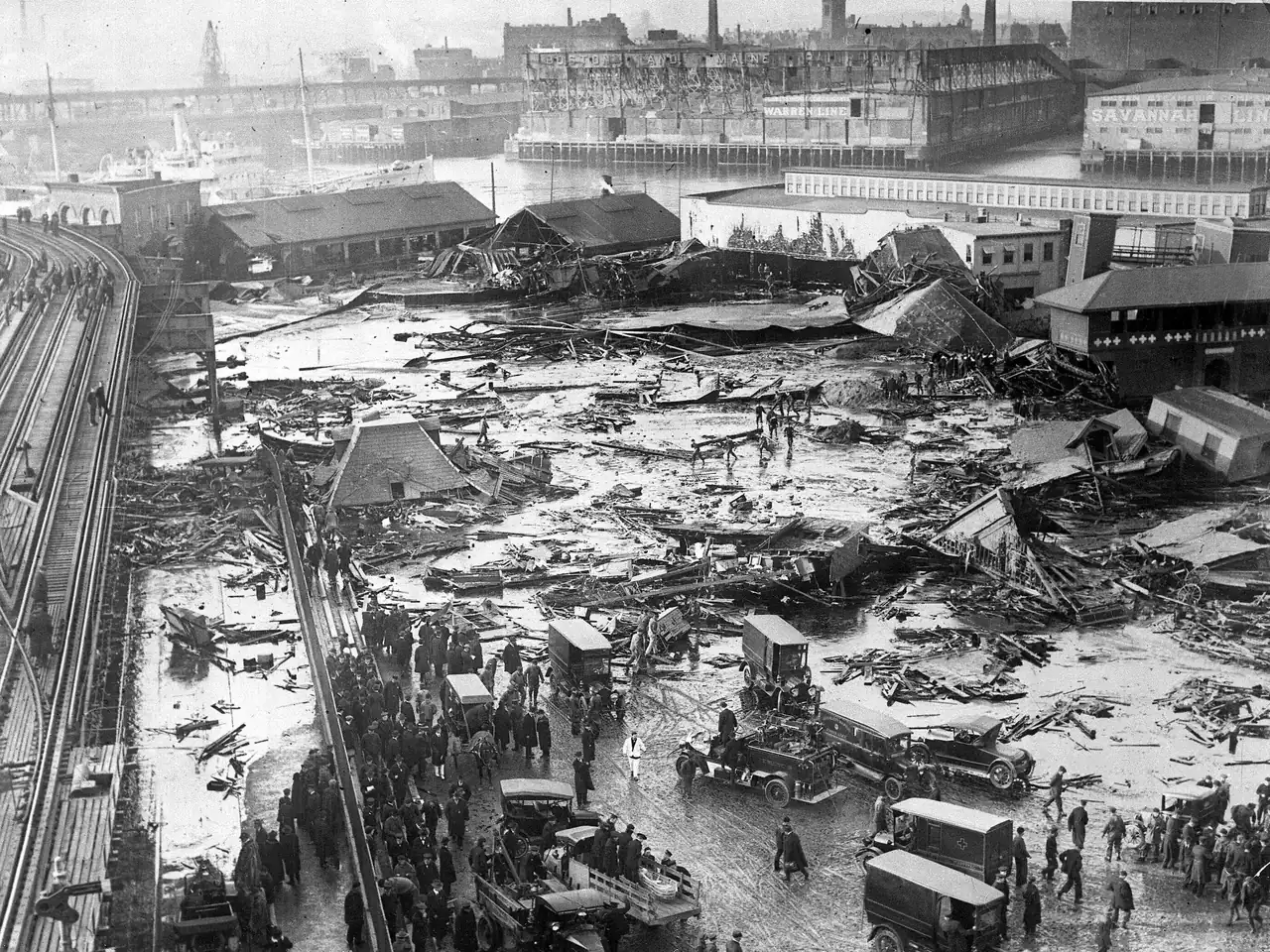
January 15, 1919, was an unusually warm day in Boston, and the North End, a crowded neighborhood by the harbor, was full of people enjoying the break from winter. Shortly after noon, they heard a low rumble. Many thought it was the elevated train. It was a 50-foot (15-meter) steel tank bursting open and releasing about 2.3 million gallons (8.7 million liters) of molasses onto the streets.
What came out was a wave. Reports at the time put it between 15 and 40 feet (5 to 12 meters) high and some 160 feet (49 meters) wide, moving at about 35 miles per hour (56 km/h). It crushed wooden houses, knocked an elevated train off its tracks and pushed the firehouse of Engine 31 off its foundation, almost into the harbor. Twenty-one people died and about 150 were injured. Among the dead were two 10-year-olds, Pasquale Iantosca and Maria Distasio, and firefighter George Layhe, who had reportedly just gone to bed when the molasses reached the station. Several horses died too.
Why was there so much molasses in the middle of a city? The tank belonged to the Purity Distilling Company, a subsidiary of United States Industrial Alcohol, and had been built in 1915 on Commercial Street. Molasses arrived by ship from the Caribbean and was fermented into industrial alcohol, which was in high demand during World War I to make munitions.
The warning signs were there from the start. The tank leaked so much that children in the neighborhood collected the molasses in pails, and when residents complained, the company painted the tank brown, a color that hid the leaks. Its walls groaned and rumbled every time it was filled. Engineers later concluded that the steel was far too thin for the weight it held. Days before the disaster, after a cold snap with temperatures as low as -16 °C, a fresh shipment of warmer molasses filled the tank almost to the top.
For decades, people wondered how something as harmless as syrup could kill so many. In 2016 and 2017, aerospace engineer Nicole Sharp and a team at Harvard University tested corn syrup in a large refrigerator and used a model of gravity currents, the same physics behind lava flows and avalanches, developed by Herbert Huppert of the University of Cambridge. The key is that molasses gets much thicker as it cools. As the winter afternoon turned into evening, the flood turned into a cold, sticky trap: rescuers struggled to move, and victims struggled to keep their faces clear to breathe.
The company first blamed an anarchist bomb. A class-action lawsuit followed, and in 1925 a court-appointed auditor ruled that the owners' negligence had caused the collapse. The cleanup took weeks, with crews spraying salt water from the harbor to break up the molasses, and some say the neighborhood smelled sweet for years. According to historian Stephen Puleo, the disaster helped bring rules that now seem obvious, such as requiring engineers to sign and seal their plans. It deserves a place on the shelf of history's strangest episodes, next to the dancing epidemic that gripped Strasbourg in 1518.
Sources: Encyclopaedia Britannica; City of Boston (Boston.gov); NBC News; The Guardian (2017); Stephen Puleo, Dark Tide (2003); The New York Times (January 16, 1919). Cover: aftermath of the molasses flood in Boston's North End, 1919, Boston Public Library, Wikimedia Commons, public domain.


