下个月,旅行者1号将成为第一个距地球一光日的人造物体
 Detetive Curioso
··4 分钟阅读·太空·132 次浏览
2026年11月18日,旅行者1号发出的无线电信号需要整整24小时才能到达地球。这艘1977年发射的探测器是如何飞这么远的,它又携带着什么?
本文尚未翻译。
Light is the fastest thing in the universe. It crosses the distance from the Moon in just over a second and arrives from the Sun in about eight minutes. On November 18, 2026, it will need a full day to reach us from a machine we built.
That is the date NASA engineers have calculated for Voyager 1 to cross the one light-day mark: roughly 25.9 billion kilometers (16.1 billion miles) from Earth, or about 173 times the distance between Earth and the Sun. No human-made object has ever been that far away. When the controllers at the Jet Propulsion Laboratory send a command, they will wait two full days to find out whether the probe obeyed: one day for the message to go, another for the answer to come back.
The journey began on September 5, 1977, at Cape Canaveral. Voyager 1 was launched sixteen days after its twin, Voyager 2, but on a faster path, which is why it took the lead. It was designed to last about five years and to study Jupiter and Saturn. It flew past Jupiter in March 1979 and Saturn in November 1980, sending back the first detailed views of volcanoes erupting on the moon Io and of the hazy atmosphere of Titan.
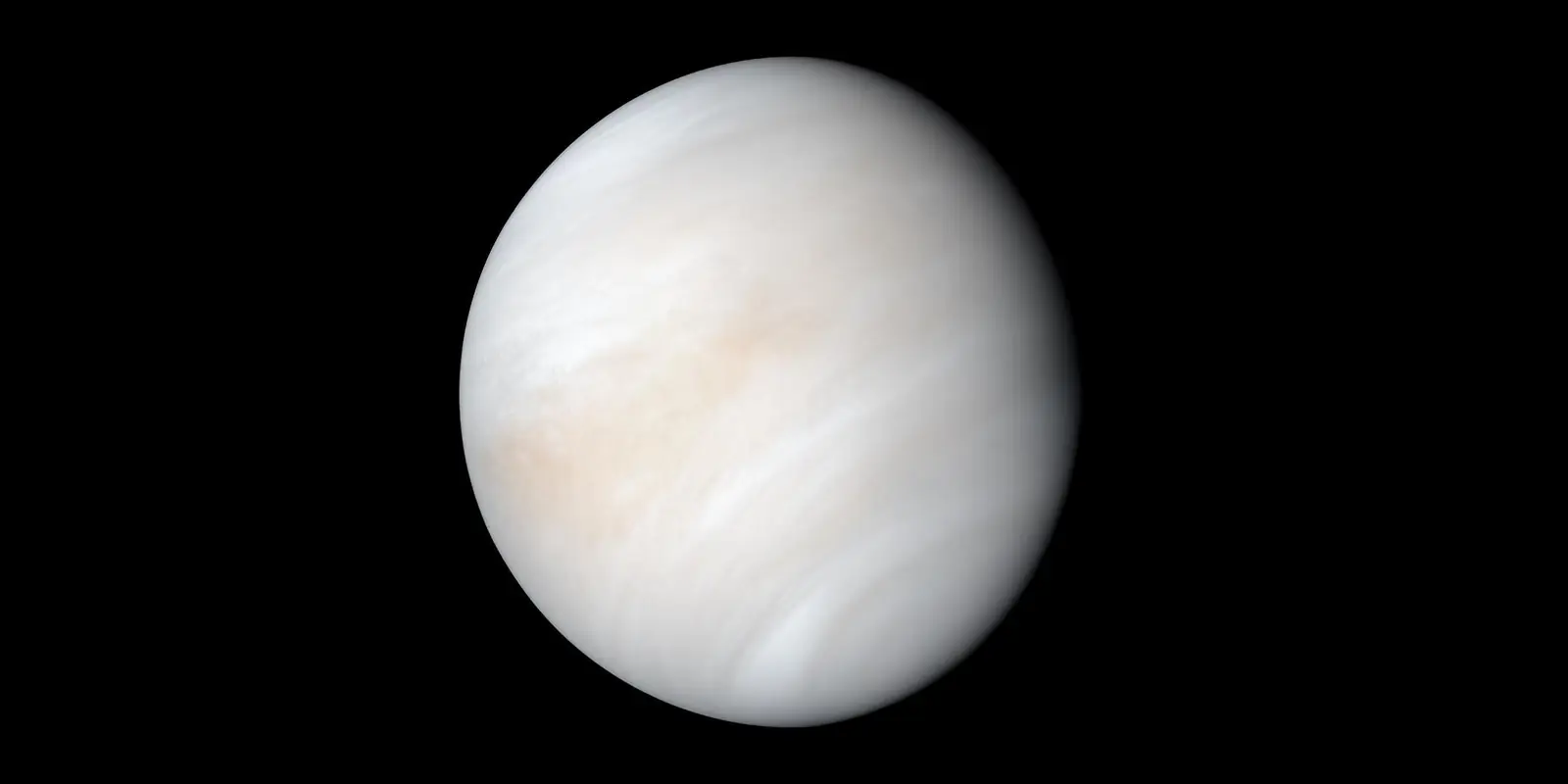
After Saturn, the mission was supposed to be over. Instead, Voyager 1 kept going. In 1990, from about 6 billion kilometers away, it turned its camera back and took the famous “Pale Blue Dot” photo, in which the whole Earth is a speck smaller than a pixel. In the same “Family Portrait” of the solar system, it also photographed Venus, the planet where a day lasts longer than a year. On August 25, 2012, almost 35 years after launch, it became the first spacecraft to enter interstellar space, the region beyond the bubble of charged particles blown out by the Sun.
Today it travels at about 61,000 km/h (38,000 mph). That sounds absurdly fast, but space is bigger than our intuition. Reaching one light-day took 49 years, 2 months and 11 days. Even so, in about 40,000 years Voyager 1 will pass within 1.7 light-years of a small star called AC +79 3888, in the constellation Camelopardalis. Voyager 2, slower and on another route, should reach its own one light-day milestone around November 2035. The twin is also the only spacecraft ever to visit Uranus, the planet that smells like rotten eggs.
The probe is not empty. Bolted to its side is the Golden Record, a 12-inch gold-plated copper disc chosen by a committee led by astronomer Carl Sagan. It holds 115 images, greetings in 55 languages, from ancient Akkadian to Wu Chinese, the sounds of whales, rain and a mother’s kiss, and 90 minutes of music. Bach, Mozart, Beethoven and Stravinsky share the record with Louis Armstrong and Chuck Berry’s “Johnny B. Goode”. The cover even has instructions, in scientific diagrams, for playing it at 16⅔ revolutions per minute.
Nobody expects aliens to find it any time soon. The record is more of a message in a bottle, a portrait of who we were in 1977, thrown into the largest ocean there is.
The hard part now is keeping Voyager 1 alive. It runs on nuclear batteries that lose a few watts of power every year, so NASA has been switching off heaters and scientific instruments one by one. The goal is to keep at least one instrument working into the 2030s. Some day the probe will fall silent, but it will keep travelling through the galaxy for millions of years, carrying a golden record of a small blue planet.
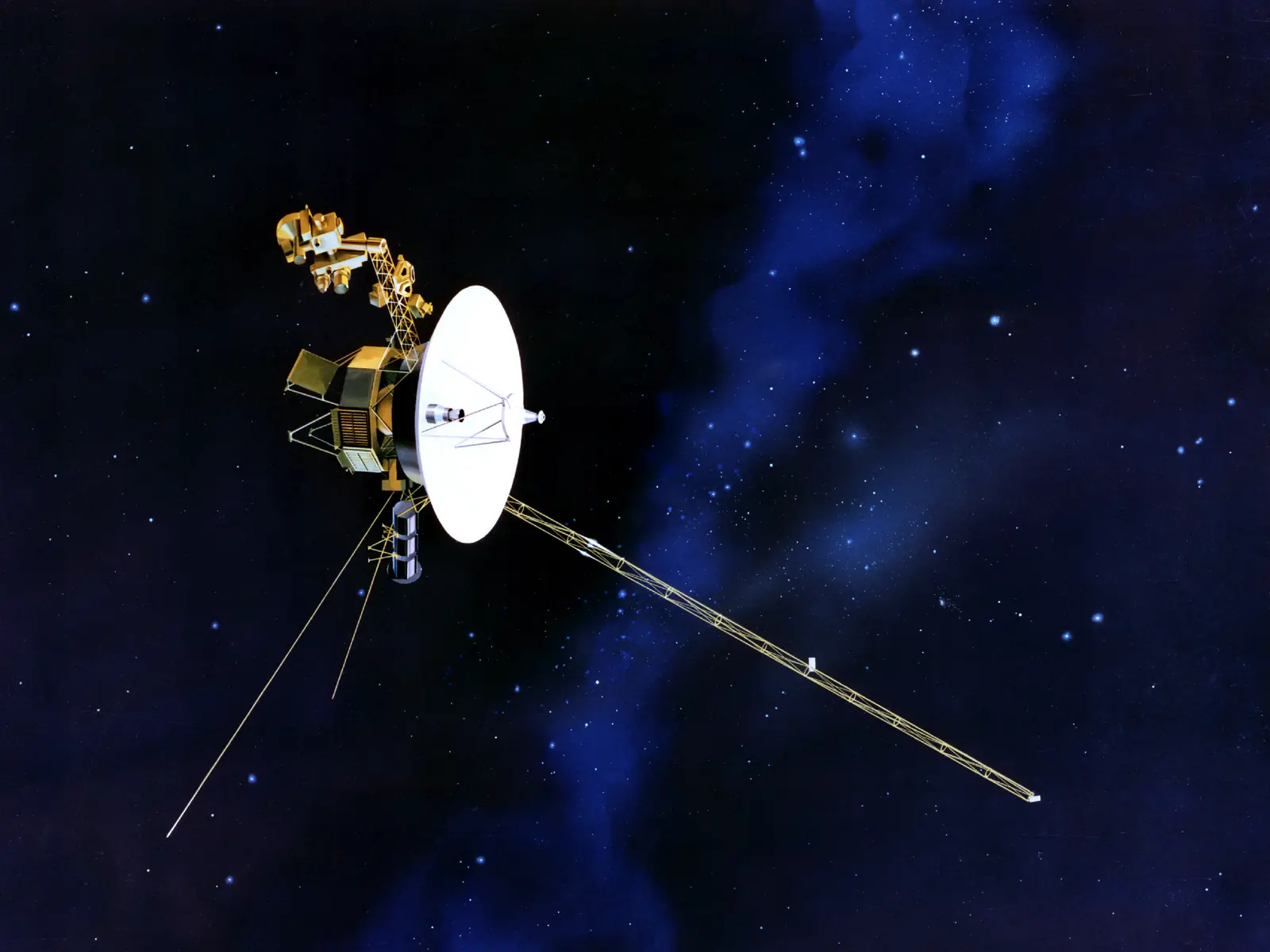
Sources: NASA Science (Voyager mission pages), NASA JPL, EarthSky, CNN. Cover: artist’s concept of the Voyager spacecraft, NASA/JPL, public domain.