在火星上,白天的天空是橙色的,日落却是蓝色的
 Detetive Curioso
··3 分钟阅读·太空·112 次浏览
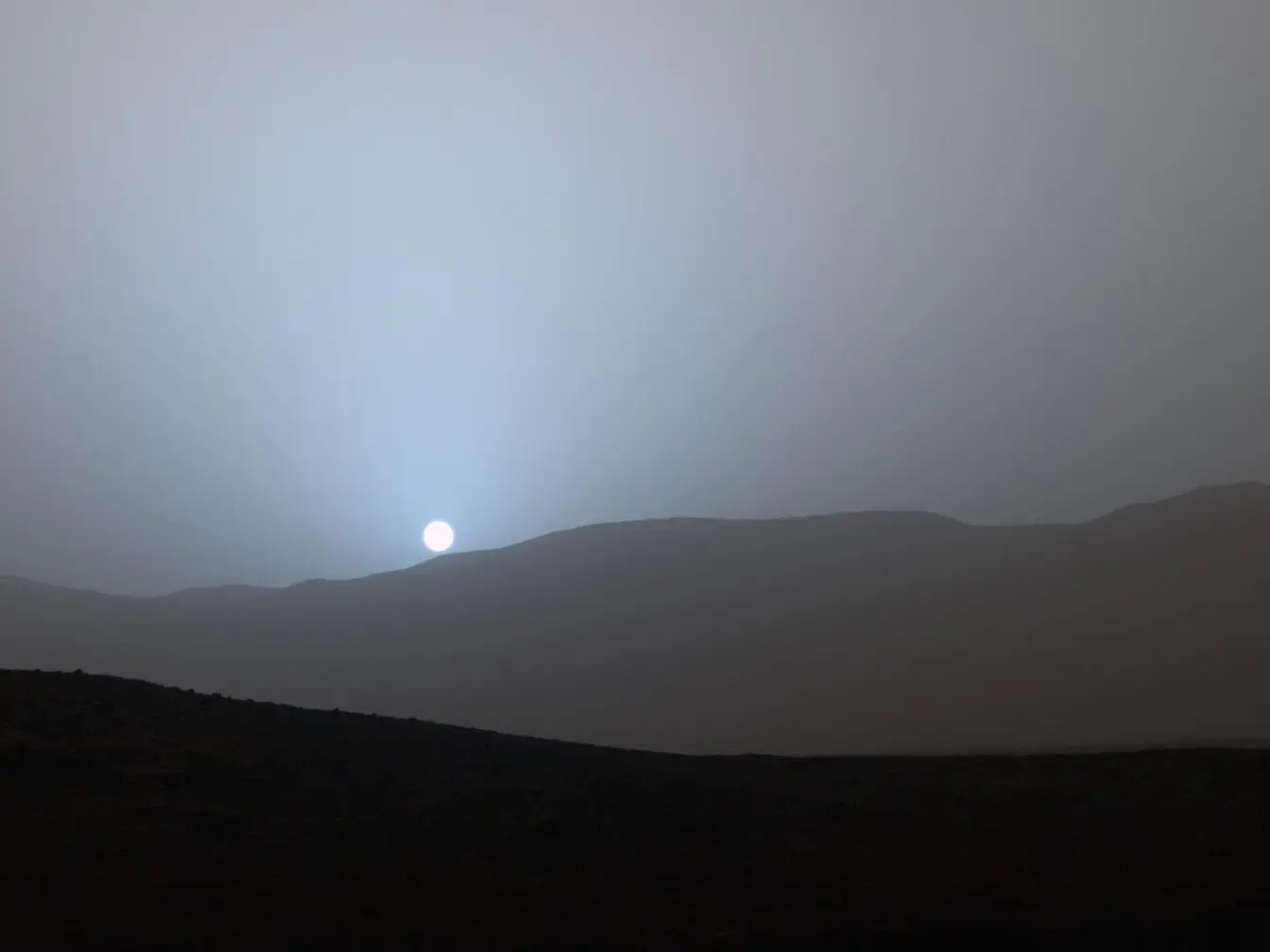
美国宇航局的好奇号火星车在盖尔撞击坑拍到了蓝色的日落。原因在于漂浮在火星空气中的尘埃颗粒大小。
本文尚未翻译。
On Earth we take two things for granted: the daytime sky is blue and the sunset is orange and red. On Mars, it is exactly the opposite. The daytime sky has a dusty, butterscotch color, and at sunset a cold blue glow appears around the Sun.
The most famous record of this came on April 15, 2015, the 956th Martian day of NASA’s Curiosity mission. From inside Gale Crater, the rover’s Mastcam camera took a sequence of images of the Sun going down behind the crater rim. NASA released the series as image PIA19400, and it quickly went around the world: a pale, small Sun, surrounded by a bluish halo, fading into a brownish-gray sky.
To understand why, it helps to remember what happens here. Earth’s atmosphere is mostly nitrogen and oxygen molecules, which are much smaller than the wavelength of visible light. Those tiny molecules scatter short wavelengths, blue light, much more than long ones. That scattered blue comes at us from every direction, so the whole sky looks blue. At sunset, sunlight crosses much more atmosphere before it reaches our eyes, the blue gets scattered away along the path, and what is left is orange and red.
Mars has a different atmosphere. It is thin, about 1% as dense as ours, and almost all carbon dioxide. Nearly all the color you see comes from very fine dust suspended in the air, particles about the size of the wavelength of light itself. Particles of that size behave differently from air molecules. They absorb part of the blue light and scatter the reddish tones in every direction, which gives the daytime sky its yellow-orange color.
But these dust grains also have a special trick: they send blue light forward, close to the direction it was already travelling. Mark Lemmon, a planetary scientist at Texas A&M University who works on the Curiosity team, explained it like this: “the very fine dust is the right size so that blue light penetrates the atmosphere slightly more efficiently.” The result is that blue stays concentrated in a small area around the Sun, while the rest of the sky looks yellow or orange.
The effect becomes strongest at sunset, because the light travels a much longer path through the dusty air. That is when the blue halo is easiest to see. And it lasts: since the dust floats high in the atmosphere, it keeps catching sunlight long after the Sun disappears, so Martian twilight can last up to two hours.
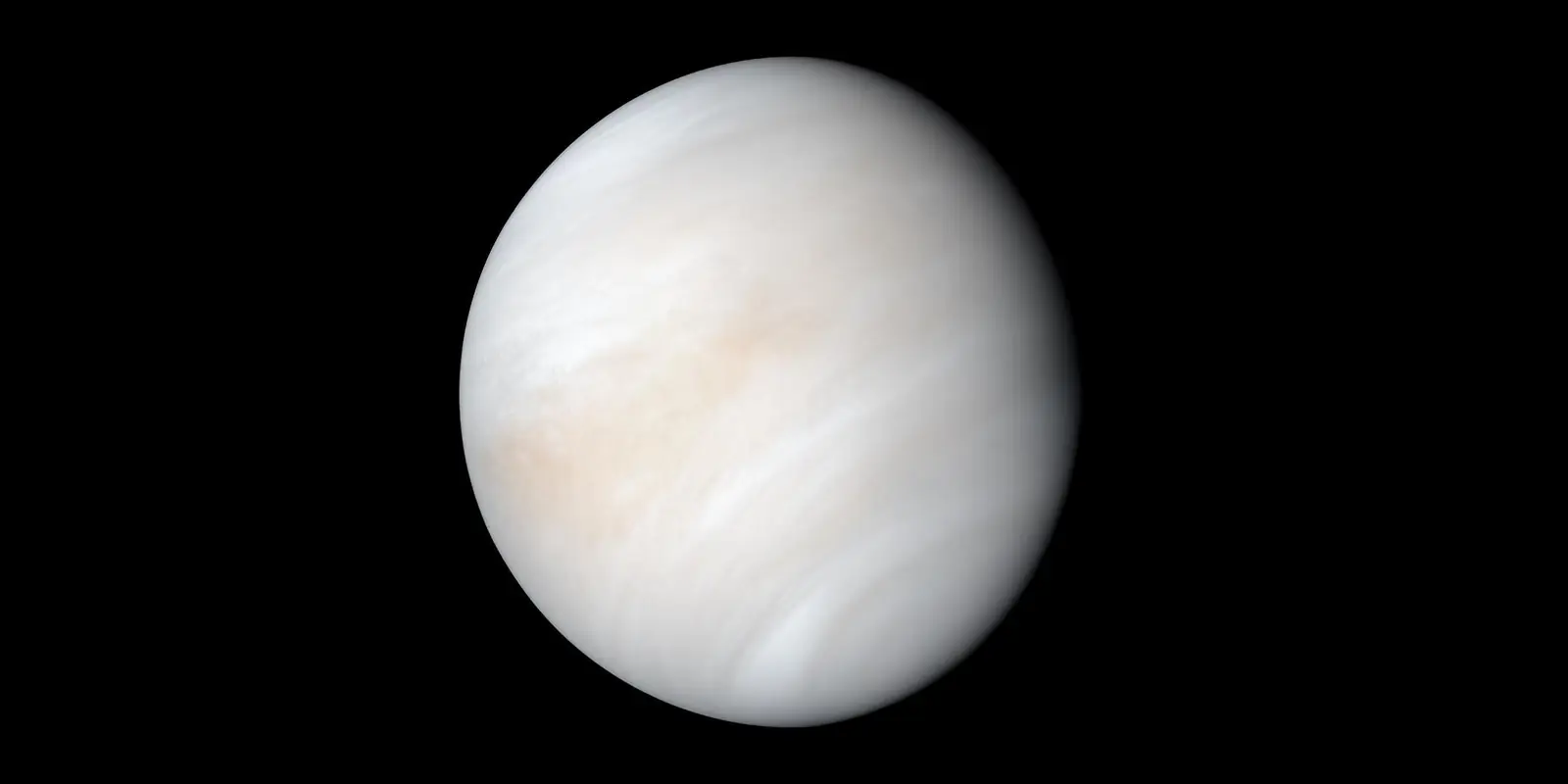
There is another detail that makes the scene look strange. Mars is about 1.5 times farther from the Sun than Earth is, so the Sun looks only about two-thirds as big in the Martian sky, and noticeably dimmer. On Venus, the oddity is different: there the Sun rises in the west, and a day lasts longer than a year.
For scientists, these pictures are more than postcards. By measuring how much light passes through the atmosphere at different angles, the team can work out how much dust is suspended at different heights, information that helps predict the planet’s famous dust storms. And for the rest of us, they are a reminder that the colors we see in the sky depend entirely on what is floating in the air.
Sources: NASA Jet Propulsion Laboratory (PIA19400 and Curiosity mission news), NASA Science. Cover: sunset in Gale Crater photographed by the Curiosity rover on April 15, 2015, NASA/JPL-Caltech/MSSS/Texas A&M Univ.