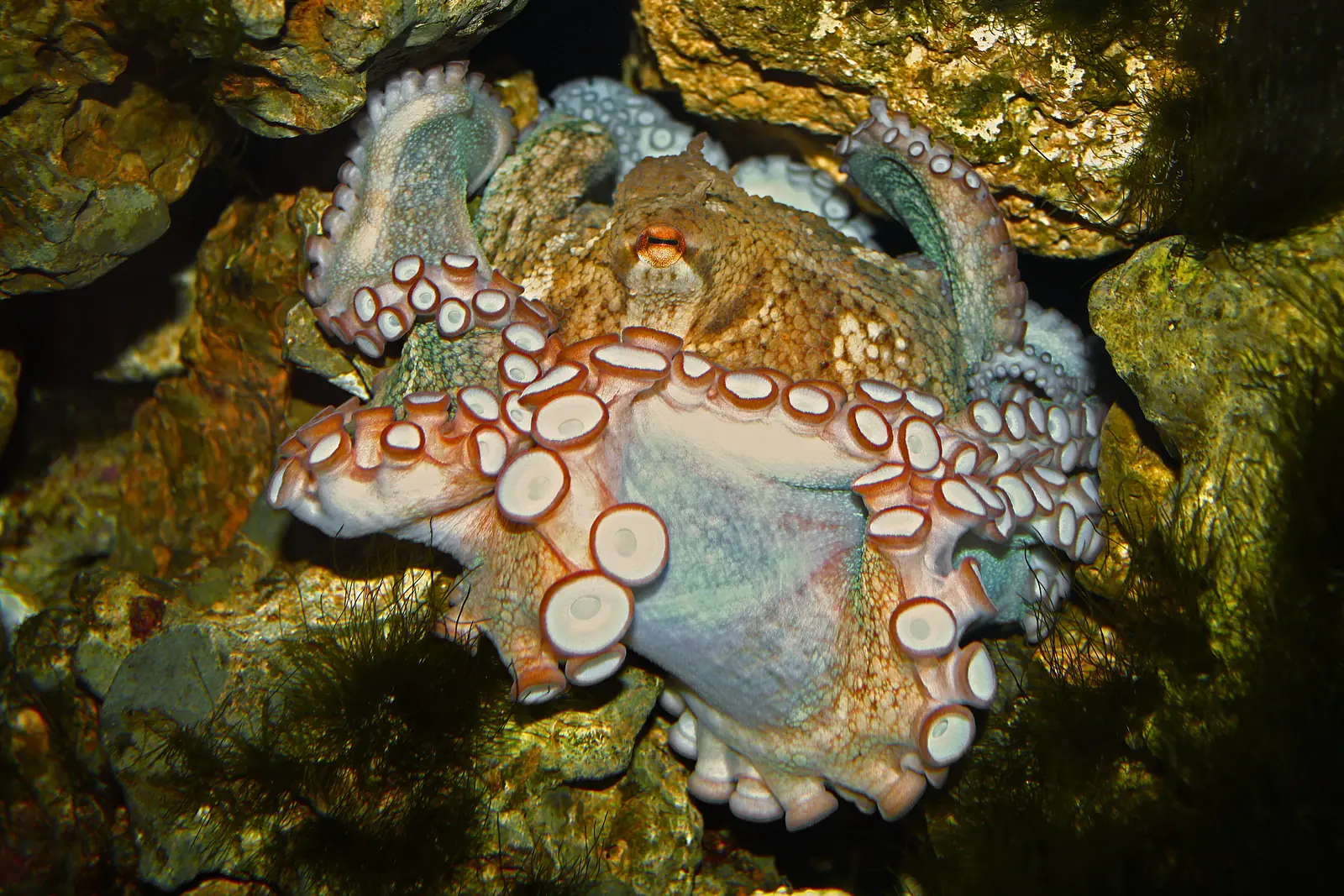
Octopuses have three hearts and blue blood, and one of them stops when they swim
 Detetive Curioso
·3 min read·Science·32 views
Two hearts pump blood through the gills, a third sends it to the body, and copper makes it blue. The catch: the main heart stops every time an octopus swims.
An octopus has three hearts and blue blood, and every time it swims, one of those hearts stops beating. It sounds like a riddle, but it is simply how the body of an octopus works.
The three hearts split the job. Two of them, called branchial hearts, sit at the base of the gills and push blood through them, where it releases carbon dioxide and picks up oxygen. The third, the systemic heart, then pumps that oxygen-rich blood to the organs and muscles. The National Aquarium in Baltimore compares it to the human heart: the two small hearts do the work of our right side, which sends blood to the lungs, and the big one does the work of our left side.
The blue color comes from chemistry. Our blood carries oxygen with hemoglobin, a protein built around iron, which turns red when it binds oxygen. Octopuses, like squid, horseshoe crabs, some tarantulas and scorpions, use hemocyanin, a protein built around copper. When it binds oxygen, it turns blue. And instead of being packed inside red blood cells, as ours is, it floats freely in the blood.
There is a catch: hemocyanin is a worse oxygen carrier than hemoglobin. In his classic book on octopus physiology, zoologist Martin Wells noted that cephalopod blood carries less than 5 milliliters of oxygen per 100 milliliters, compared with about 15 in fish. The three hearts help make up for it, pumping blood around the body at higher pressure.
Then comes the strangest part. In 1987, Wells and colleagues measured the blood pressure of common octopuses moving freely in the lab. When an octopus swims by jet propulsion, squirting water out of its body, the pressure inside the mantle rises so much that blood can no longer return to the systemic heart, and it simply stops. Since an octopus can build up only a small oxygen debt, the study concluded that jet swimming is impossible for more than a few meters. That is why octopuses usually prefer to crawl along the bottom and save swimming for escapes.
Blue blood does have an advantage in the cold. A 2015 study of the Antarctic octopus Pareledone charcoti, which lives in water close to freezing, found that it carries much more hemocyanin than its warm-water relatives, and that its hemocyanin still delivers oxygen at 0 °C. The same protein, however, loses its grip on oxygen in more acidic water, and the Smithsonian notes that this could make life harder for octopuses as the oceans become warmer and more acidic.
Nature is full of designs like this: in Australia, the wombat poops cubes. But few animals have taken their own plumbing as far as the octopus, a mollusk related to clams that ended up with three hearts, blue blood and a heart that switches off whenever it decides to swim.
Sources: Smithsonian Ocean; National Aquarium; Wells et al., Journal of Experimental Biology (1987); Martin Wells, Octopus: Physiology and Behaviour of an Advanced Invertebrate (1978); Oellermann et al., Frontiers in Zoology (2015); BBC Science Focus; Smithsonian Magazine. Cover: common octopus (Octopus vulgaris) by H. Zell, Wikimedia Commons, CC BY-SA 3.0.