The Great Emu War: when Australia sent machine guns against birds and lost
 Detetive Curioso
··3 min read·History·112 views
In 1932, soldiers armed with Lewis guns and 10,000 rounds went to war against 20,000 emus in Western Australia. The birds won on points.
It sounds like a joke, but it is in the military archives. In November 1932, the Australian government sent soldiers with machine guns to fight a flock of emus. A month later, the soldiers went home and the emus were still there.
The story starts after the First World War. Thousands of veterans received land in Western Australia to grow wheat. Then came the Great Depression, wheat prices collapsed, and the government promised subsidies that never really arrived. On top of that, in 1932 around 20,000 emus migrated inland after the breeding season and found something wonderful: open fields full of crops and water, around the town of Campion.
Emus are not small. They stand up to almost two meters tall, can run at about 50 km/h and travel long distances in search of food. They trampled the wheat and broke the rabbit-proof fences, letting other pests in. The farmers, many of them ex-soldiers, sent a delegation to Canberra. They wanted machine guns.
The Minister of Defence, Sir George Pearce, said yes. The operation was given to Major G.P.W. Meredith of the 7th Heavy Battery of the Royal Australian Artillery, with two men, Sergeant S. McMurray and Gunner J. O’Halloran, two Lewis guns and 10,000 rounds of ammunition. The government even sent a cameraman from Fox Movietone, hoping for good publicity.
The first contact, on November 2, was a disaster. The emus were out of range, and when the farmers tried to herd them, the flock split into small groups and ran in every direction. On November 4, Meredith set up an ambush at a dam where about 1,000 emus were drinking. The gunners waited until the birds were close, opened fire… and the gun jammed after killing about a dozen. The rest disappeared.
The soldiers tried mounting a gun on a truck, but the vehicle could not keep up with the birds on the rough ground, and the bumps made aiming impossible. Every flock seemed to have a lookout, a tall emu that watched while the others ate and gave the alarm as soon as the soldiers came near. After using about 2,500 rounds, the army was withdrawn on November 8, while the press, in Australia and abroad, had a great time.
Farmers complained again and Meredith returned on November 13. This time the results were better, and by the end of the operation, on December 10, he reported 986 emus killed with 9,860 rounds, exactly ten bullets per bird, plus about 2,500 wounded. Historians treat that last number with a lot of suspicion. His most famous line was about the birds’ toughness: “They can face machine guns with the invulnerability of tanks.”
In the end, the solution was much less cinematic. Farmers asked for military help again in 1934, 1943 and 1948 and were refused. Instead, the government offered a bounty system, which removed far more emus than the machine guns ever did, and better fences were built. Today the emu is a protected native species and appears on Australia’s coat of arms, right next to the kangaroo. Australian wildlife never runs out of surprises: the wombat, another marsupial, poops cubes. It is hard to imagine a better ending for the winners of the war.
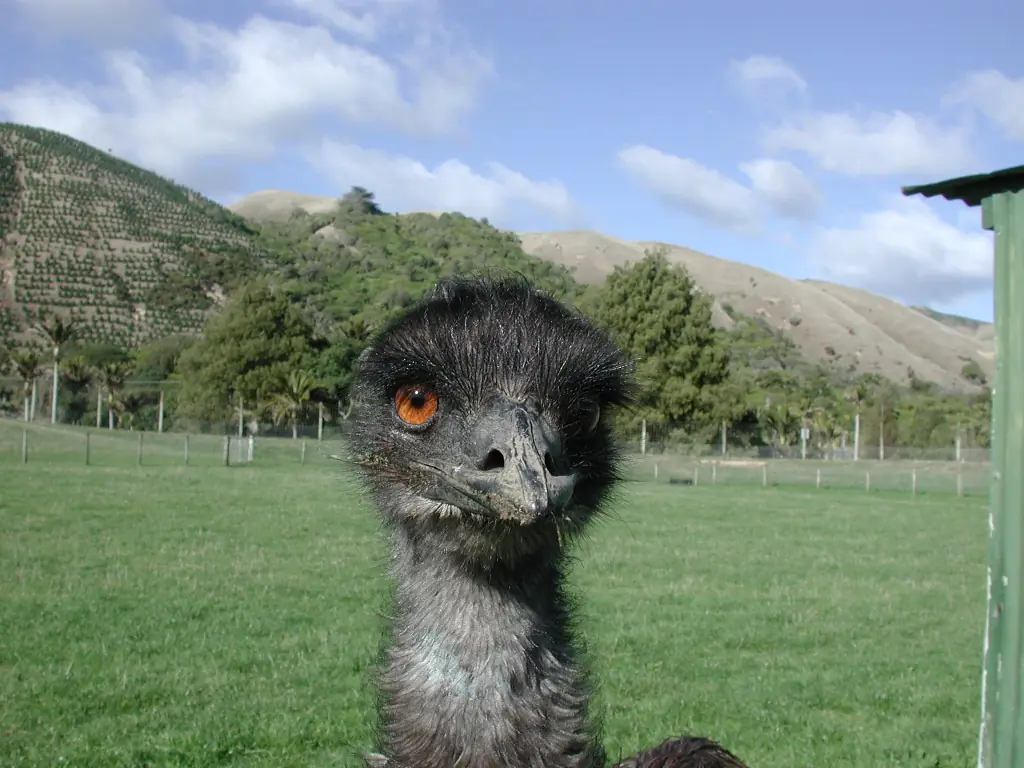
Sources: Encyclopaedia Britannica, ABC (Australian Broadcasting Corporation), The Sydney Morning Herald, National Archives of Australia. Cover: emu portrait at Lindale Farm, by Pseudopanax, public domain.


