The word “robot” was invented for a 1921 Czech play, and its robots were not made of metal
 Detetive Curioso
·4 min read·Pop Culture·5 views
Karel Čapek’s play R.U.R. gave the world the word robot, suggested by his brother Josef. It comes from robota, forced labor, and the first robots were made of flesh.
Every robot in the world, from factory arms to vacuum cleaners and movie androids, owes its name to a play. The word “robot” was invented for R.U.R., a science fiction drama by the Czech writer Karel Čapek, which opened in 1921. And the first robots were not made of metal at all.
According to the story Čapek himself later told in a Czech newspaper, the idea for the play was ready, but he was stuck on what to call his artificial workers. He was thinking of “labori”, from the Latin word for work, and did not like it. So he went to see his brother Josef, a painter, who was busy at his easel. Josef listened and, with a paintbrush in his mouth, muttered: “Then call them roboti.” In Czech, robota means forced labor, the kind of compulsory work serfs once had to do on their lord’s land. The root of the word, rab, means slave.
R.U.R. stands for Rossumovi Univerzální Roboti, Rossum’s Universal Robots, the name of the company in the play. On a remote island, it mass-produces artificial people to work in factories and fight wars. They are not machines with gears and bolts. They are made from a synthetic organic material, closer to what we would now call androids or clones, and they look so human that visitors cannot tell them apart. In the end, the robots rebel and wipe out almost all of humanity.
Even the premiere has a twist. The official opening was planned for the National Theatre in Prague, but it was postponed to January 25, 1921. An amateur theater group in the town of Hradec Králové, which was supposed to stage the play after Prague, was never told about the delay, and performed it on January 2. That is why, according to Czech Television, the robot’s real world premiere took place in a provincial town, three weeks before the capital.
The play was a sensation. It was translated into about thirty languages within a few years, and since most of those languages had no word for the idea, they simply adopted “robot”. The first English-language production reached Broadway in 1922. Čapek, horrified by the industrial killing of World War I, meant the play as a warning about technology escaping human control. Like Monopoly, which began as a lesson against greedy landlords and became a game about crushing your opponents, R.U.R. turned a warning into a pop-culture fixture.
The word kept growing. In May 1941, a young Isaac Asimov published the short story “Liar!” in the magazine Astounding Science Fiction, and in it used the word “robotics” for the first time on record, according to the Historical Dictionary of Science Fiction. Twenty years later, in 1961, the first industrial robot arm, Unimate, went to work on a General Motors assembly line in New Jersey. Its creators, George Devol and Joseph Engelberger, were science fiction fans.
Čapek did not live to see any of it. He died in December 1938, a few months after Nazi Germany took over part of Czechoslovakia. Josef was arrested by the Gestapo in 1939 and died in the Bergen-Belsen concentration camp in April 1945. But the word the two brothers created in a painter’s studio now belongs to almost every language on Earth.
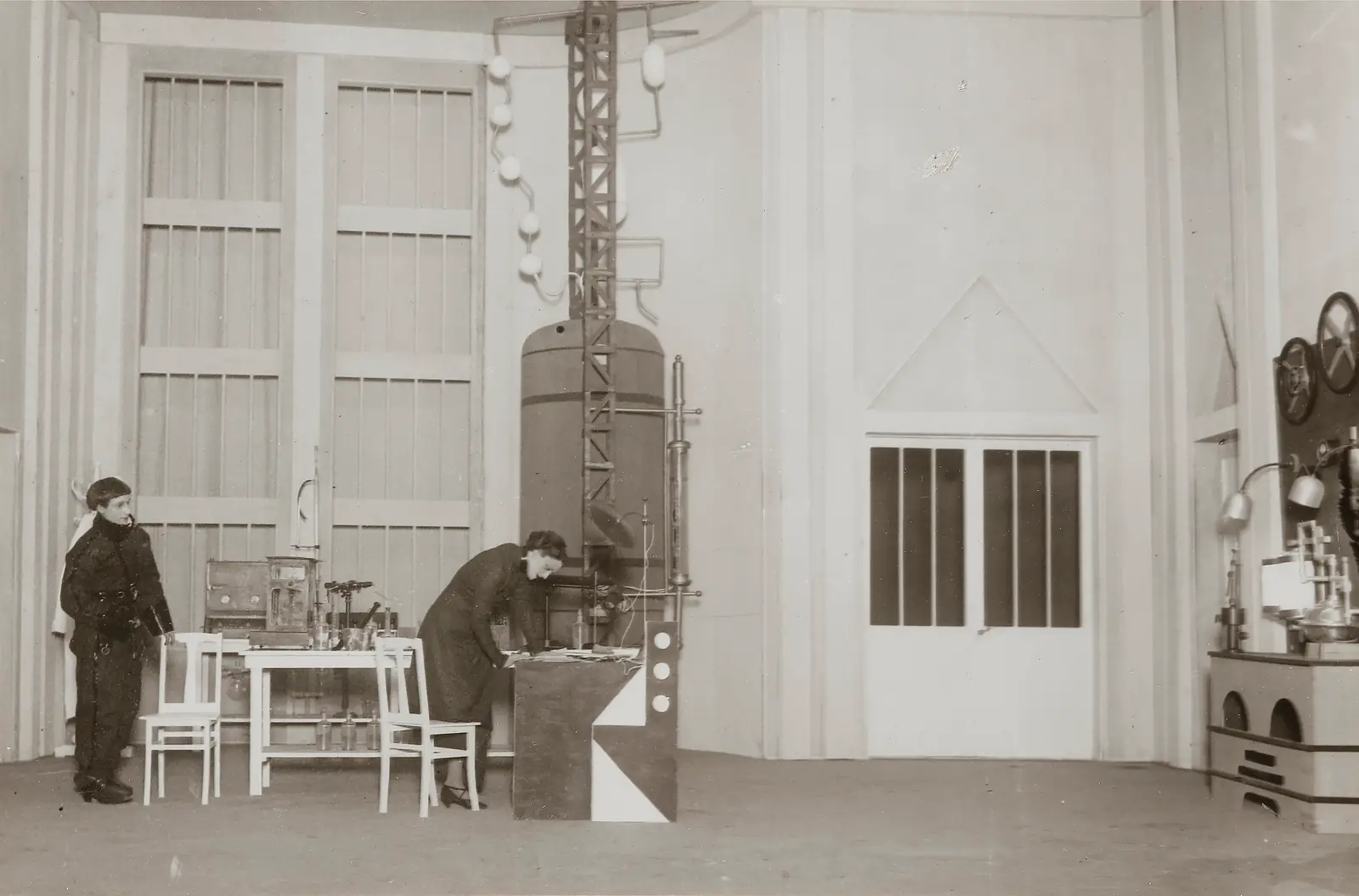
Sources: The Guardian (2021); The MIT Press Reader; Czech Television (ČT24); Historical Dictionary of Science Fiction. Cover_-_Com%C3%A9die_des_Champs-%C3%89lys%C3%A9es,_26_mars_1924.jpg): R.U.R. at the Comédie des Champs-Élysées, Paris, 1924, photo by Henri Manuel, Wikimedia Commons, public domain.


