A sugar cube of neutron star would weigh as much as a mountain
 Detetive Curioso
·4 min read·Space·5 views
Neutron stars pack up to twice the mass of the Sun into a ball the size of a city. They spin hundreds of times per second and forge much of the gold in the universe.
Imagine a sugar cube. Now imagine that the same little cube weighs about a billion tons, as much as a mountain. According to NASA, that is roughly what a sugar cube of material from a neutron star would weigh on Earth. They are the densest objects in the universe that we can observe directly.
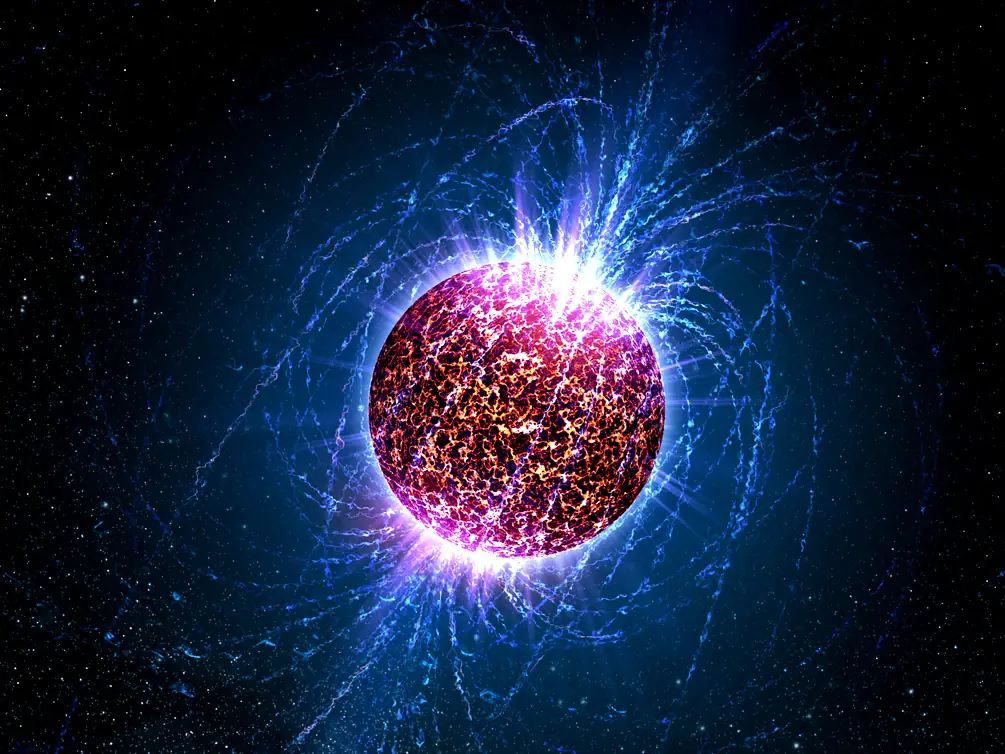
A neutron star is what is left after a massive star dies. When a star several times heavier than the Sun runs out of fuel, its core collapses in a fraction of a second while the outer layers explode as a supernova. The core is crushed so hard that protons and electrons merge into neutrons. The result is a ball about 20 kilometers across, roughly the size of a city, holding up to twice the mass of the Sun.
That compression has strange consequences. Gravity at the surface is about a billion times stronger than on Earth. In 2021, a team led by Fabian Gittins, of the University of Southampton, calculated that the tallest “mountains” on a neutron star are probably only a fraction of a millimeter high. Their magnetic fields can be trillions of times stronger than Earth’s.
They also spin. When a star collapses, it spins faster, like a figure skater pulling in her arms. Some neutron stars send out beams of radiation from their magnetic poles, and as they rotate those beams sweep across space like a lighthouse. If a beam crosses the Earth, we see regular flashes. These are pulsars. The fastest known, PSR J1748-2446ad, in a star cluster called Terzan 5, spins 716 times per second. Its discovery was published in the journal Science in 2006.
The first pulsar was found by accident. In 1967, Jocelyn Bell, a doctoral student at the University of Cambridge, noticed a strange “scruff” in the data from a radio telescope she had helped build. It was a signal repeating every 1.337 seconds, so regular that the team half-jokingly called it LGM-1, for “little green men”. A second pulsar, found soon after in another part of the sky, ruled out aliens. In 1974, the Nobel Prize in Physics went to her supervisor, Antony Hewish, and to Martin Ryle, but not to her, one of the most debated omissions in the history of the prize. Decades later, in 2018, she received the Special Breakthrough Prize in Fundamental Physics, worth 3 million dollars, and donated all of it to create scholarships for physics students from underrepresented groups.
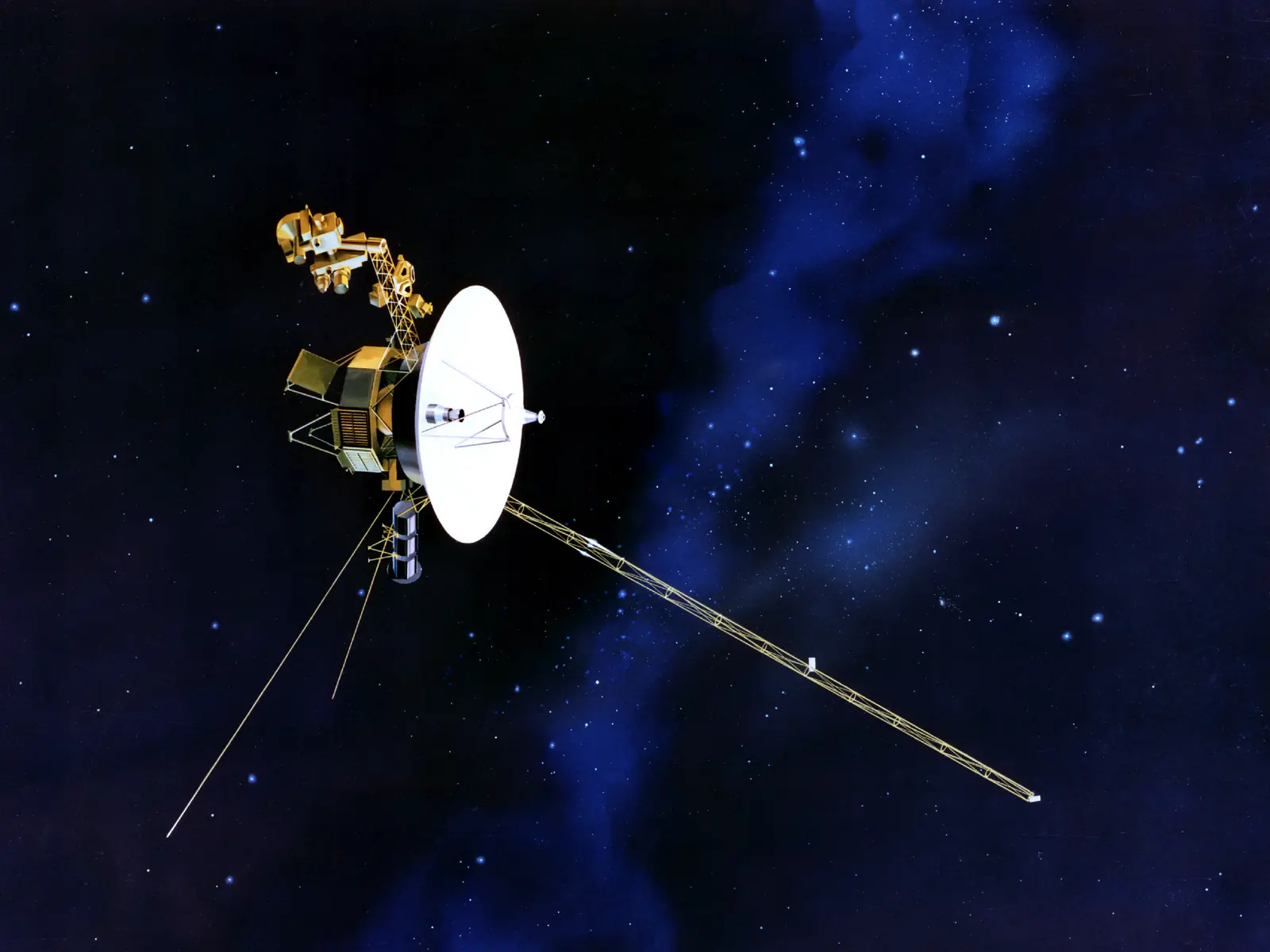
Neutron stars may even be the reason you own something made of gold. On August 17, 2017, the LIGO and Virgo detectors picked up gravitational waves from two neutron stars colliding about 130 million light-years away, in the galaxy NGC 4993. Telescopes around the world, including NASA missions, then saw the light of the explosion, called a kilonova. Its glow showed the signature of freshly made heavy elements, such as gold and platinum. Collisions like this may be one of the main sources of those elements in the universe. So the gold on the Golden Record carried by Voyager 1 may have been forged, billions of years ago, in the crash of two dead stars.
Sources: NASA Science (“Neutron Stars Are Weird!”); NASA Imagine the Universe; NASA Hubble (pulsars); Hessels et al., Science (2006); NASA (GW170817 news release); LIGO Caltech; Royal Astronomical Society (2021); Breakthrough Prize Foundation. Cover: illustration of a neutron star, Casey Reed, Penn State University, Wikimedia Commons, public domain.