Einstein's Brain Was Taken at His Autopsy and Spent Years in a Cider Box
 Detetive Curioso
·4 min read·Science·0 views
Einstein asked to be cremated, but the pathologist at his autopsy kept his brain, cut it into 240 pieces and carried it around America for decades.
Albert Einstein wanted to be cremated and have his ashes scattered in secret. He got only part of his wish. When he died at Princeton Hospital on 18 April 1955, at age 76, pathologist Thomas Harvey removed his brain during the autopsy, weighed it at 1,230 grams and kept it. For more than 40 years, the most famous brain of the 20th century traveled with him, at one point stored in a cider box.
According to an account published by NPR, Harvey did not have clear permission. When the story broke a few days later, he obtained a reluctant blessing from Einstein's son, Hans Albert, on condition that the brain be used only for science and that any results appear in serious journals. Harvey also removed Einstein's eyes and gave them to the physicist's ophthalmologist, Henry Abrams. The rest of the body was cremated that same day.
Harvey photographed the brain from many angles, then cut it into 240 blocks embedded in celloidin and prepared hundreds of microscope slides. The pieces did not fare well. Harvey lost his hospital job, moved to the Midwest and, while working at a testing lab in Wichita, Kansas, kept the jars in a cider box under a beer cooler. He later lost his medical license in 1988 and took a factory job in Lawrence, Kansas.

The world had largely forgotten the brain until 1978, when journalist Steven Levy tracked Harvey down and wrote about it. Studies followed. In 1985, neuroscientist Marian Diamond of UC Berkeley compared four small samples with the brains of 11 other men and reported in Experimental Neurology90123-2) that Einstein had more glial cells, the support cells of the nervous system, for each neuron. Only one of the four areas showed a statistically significant difference.
In 1999, a team led by Sandra Witelson at McMaster University in Canada studied Harvey's photographs. In The Lancet10327-6), they reported that Einstein's parietal lobes, linked to math and spatial reasoning, were about 15 percent wider than in control brains, and that part of the Sylvian fissure, a major groove on the side of the brain, was unusually short.
In 2010, Harvey's heirs gave his photographs and a set of slides to the National Museum of Health and Medicine. Anthropologist Dean Falk and colleagues analyzed 14 of those images, never published before, and wrote in Brain in 2012 that while the overall size and shape were normal, several cortical regions were extraordinary, including an extra ridge in the frontal lobe. They also noted that 180 of the 240 blocks are now held at the University Medical Center of Princeton, and that most slides are still unaccounted for.
Not everyone is convinced. Critics such as psychologist Terence Hines argue that every brain is unique, that Diamond reported only a few of the comparisons she could have made, and that a single brain cannot show whether any feature caused genius or came from a lifetime of hard thinking, as National Geographic summarized.
Anyone can still see a piece of the story. The Mütter Museum in Philadelphia acquired 46 slides of Einstein's brain, and since 2013 they have been on display. Harvey himself died in 2007, aged 94.
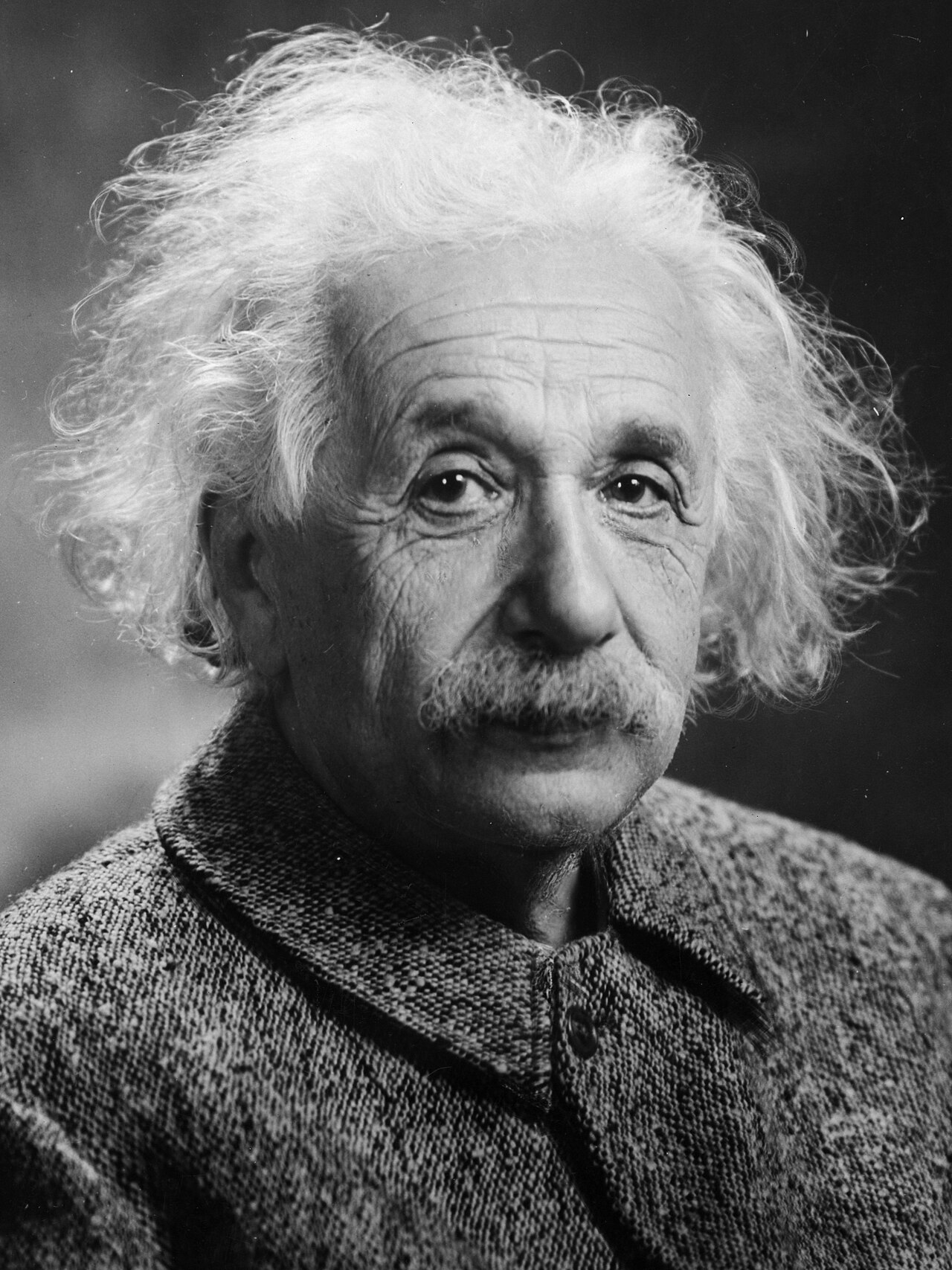
Sources: NPR (2005); Diamond et al., Experimental Neurology (1985)90123-2); Witelson et al., The Lancet (1999)10327-6); Falk et al., Brain (2012); Falk, Frontiers in Evolutionary Neuroscience (2009); National Geographic (2014). Cover: Albert Einstein photographed by Orren Jack Turner in 1947.


