袋熊为什么拉出立方体形状的便便?地球上唯一能做到的动物
 Detetive Curioso
··3 分钟阅读·科学·75 次浏览
普通袋熊一晚能留下多达100块立方体粪便。科学家发现,棱角是在肠道内部塑造的,而不是在出口处。
本文尚未翻译。
Walk through the Tasmanian bush at night and you might find something that looks as if it was cut with a knife: small brown cubes, about two centimeters on each side, sitting on top of a rock or a fallen log. They are wombat droppings. As far as scientists know, the bare-nosed wombat is the only animal in the world that produces cube-shaped feces.
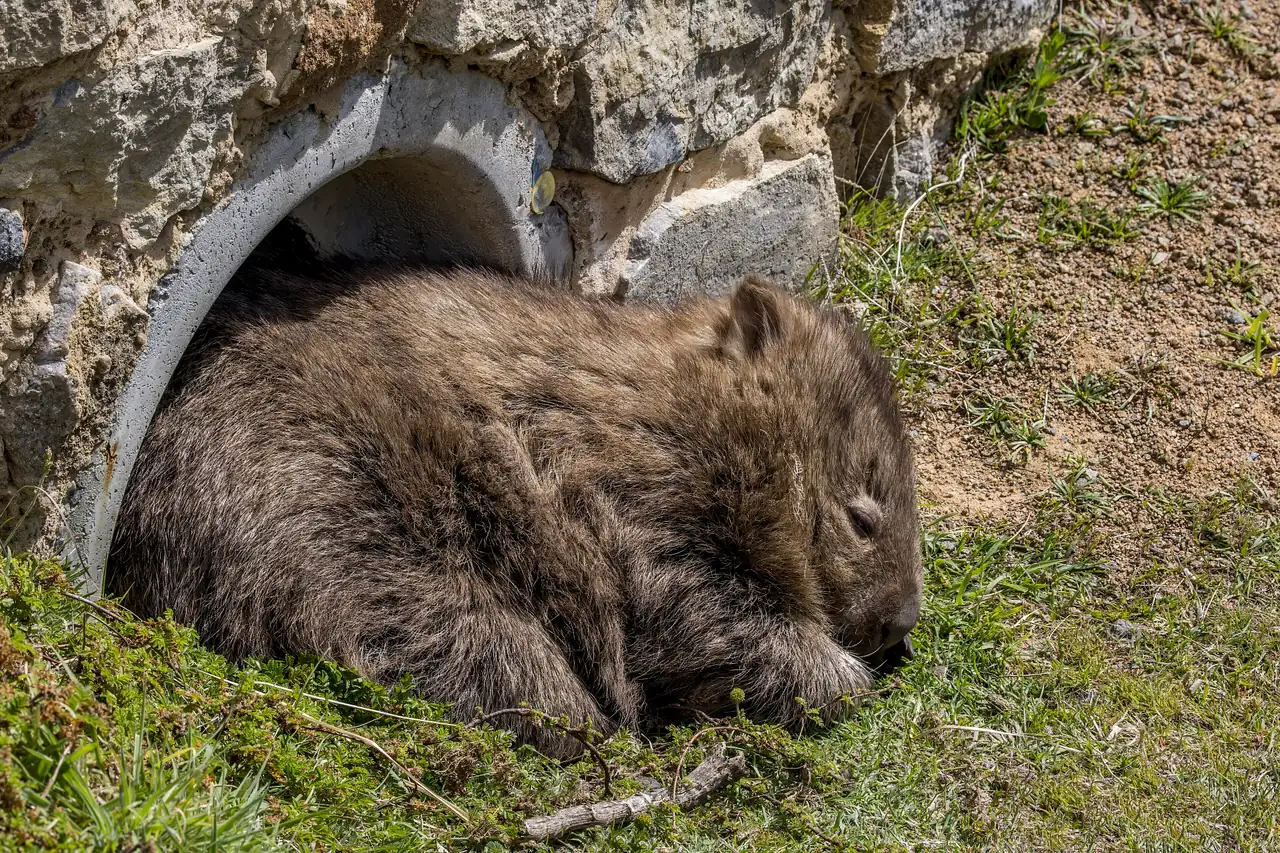
Wombats are stocky, burrowing marsupials from south-eastern Australia. A single animal can leave up to 100 of these cubes in one night. For a long time, the obvious question had no clear answer: how does a soft, round intestine make flat faces and sharp corners? One popular guess was a square-shaped anus. It is not.
In 2018, Patricia Yang, then a postdoctoral researcher at Georgia Tech, and her colleagues, including David Hu and Scott Carver of the University of Tasmania, examined the digestive tracts of wombats that had been put down after being hit by cars. They found that the feces stay almost liquid for most of the journey and only turn solid near the end. The cubes take shape inside the last stretch of the intestine, well before they reach the exit.
The team then inflated an emptied wombat intestine with a long balloon and measured how the wall stretched. It did not stretch evenly: some regions stretched far more than others. In 2021, a more detailed study in the journal Soft Matter showed that the cubes form in the final 17 percent of the intestine, where the wall has bands that are about twice as thick and four times stiffer than the tissue next to them.
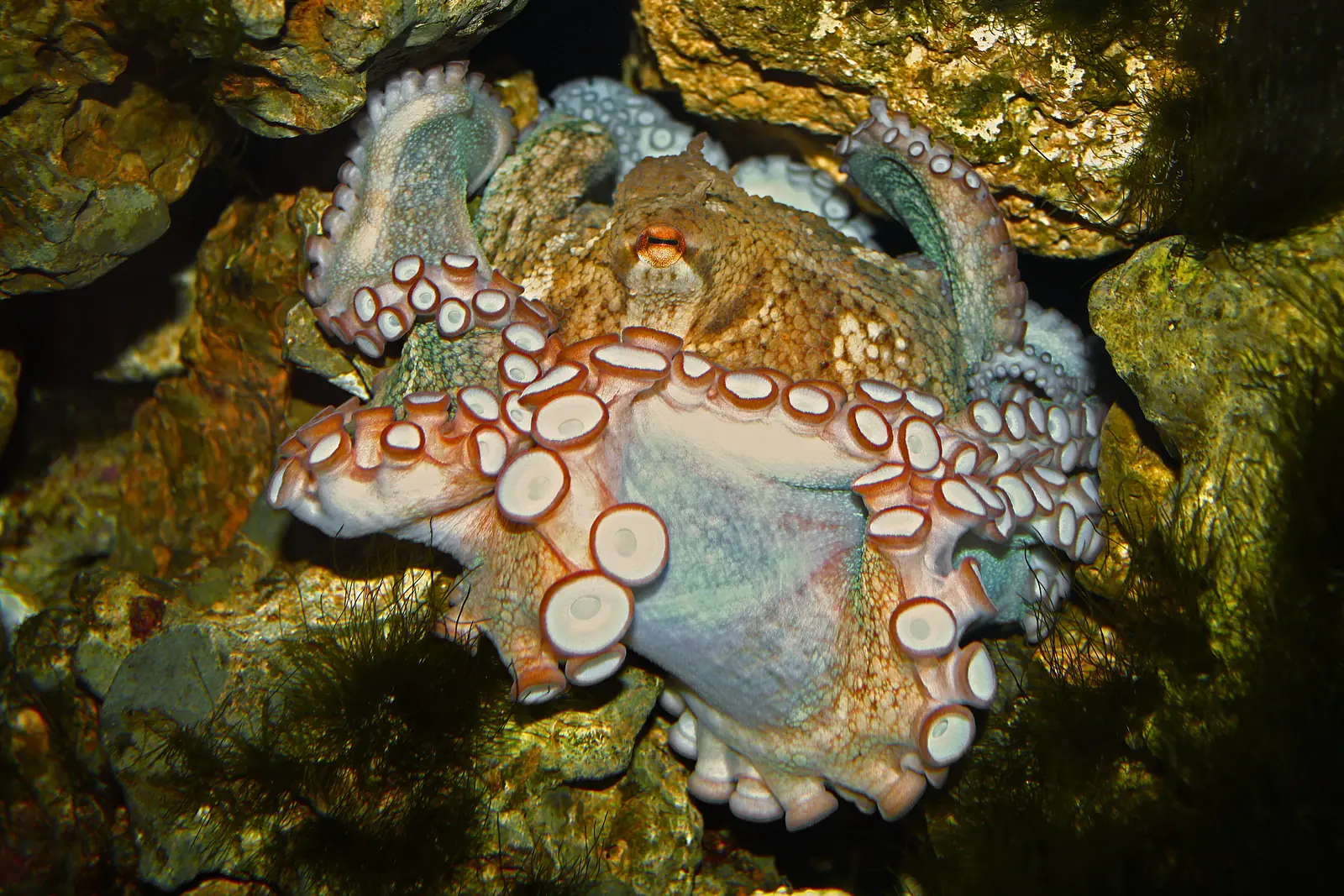
That uneven wall is the trick. As the intestine contracts again and again to push its contents along, the stiff regions squeeze faster and the softer regions move more slowly. A computer model of a ring made of alternating stiff and soft sections produced the same result: flat sides with corners in between. Add the fact that the feces dry out a lot in the colon, and you get a firm, regular cube that keeps its shape on the way out of a perfectly round opening. Strange plumbing is not unique to wombats: the octopus has three hearts and blue blood.
Why would a wombat need cubes? Wombats have poor eyesight and communicate largely by smell. They leave their droppings in prominent places, such as rocks, logs and the area around their burrows, to mark their home range. Researchers suggest that a cube is less likely to roll away than a sphere. Not every wombat expert is convinced the shape evolved for that reason, though, and some point out that wombats do not deliberately stack their droppings.
The research won the 2019 Ig Nobel Prize in Physics, an award for science that first makes people laugh and then makes them think. The scientists argue that the second part matters. Understanding how soft tissue can mold sharp corners could inspire new manufacturing methods, and because changes in the stiffness of the colon are linked to some diseases in people, the shape of feces might one day help doctors spot problems earlier. Australia’s wildlife is full of surprises: in 1932, the country even lost a war against emus.
Sources: Yang et al., "Intestines of non-uniform stiffness mold the corners of wombat feces", Soft Matter (2021); Yang, Chan, Carver & Hu, American Physical Society Division of Fluid Dynamics (2018); Royal Society of Chemistry; Georgia Tech; BBC News; Improbable Research (Ig Nobel Prize 2019). Cover_Maria_Island.jpg): common wombat on Maria Island, Tasmania, by Charles J. Sharp, Wikimedia Commons, CC BY-SA 4.0.